Humans are considered as the smartest species on the planet and considering our evolution of intelligence, we prefer to surround ourselves with smart people. Our mindset is such that we even want to have the most intelligent and smartest kids. But our outlook is not limited to humans as most pet owners want clever dogs that are able to understand commands.
However, pet owners must understand that an intelligent dog does not always make the best pet. Our four-legged friend is part of our family and it does not matter how smart or dumb they are, it is mutual love, care, and understanding that makes them great pets. But what makes a dog breed smart? Is it the ability to learn new commands or other aspects of its behavior? Even humans are not smart in all aspects of life. For instance, Albert Einstein – considered one of the smartest brains on the planet for deriving the theory of relativity, was not clever enough to solve simple arithmetic.
The veteran canine researcher – Dr. Coren has authored hundreds of books on dogs. But one book, in particular, focuses on dog intelligence. The book titled “The Intelligence of Dogs” lists the smartest dogs after surveying and consulting over 200 dog-obedience judges.
According to Dr. Coren, the level of concordance between the judges was high. Each of the judges was provided with a detailed questionnaire to rank various breeds. Interestingly, over 190 judges ranked Border Collie breed in the top 10 when it came to dog intelligence. Similarly, over 120 judges rated Afghan Hound as the least smart breed. The research also pointed out that there are several exceptions and most of it comes down to training. Dr. Coren believes that the canines’ mental capability is equal to that of a human child aged 2 years. Interestingly, our four-legged friend is even capable of solving complex problems.
One must understand that there is no easy way to rate canine intelligence. Having said that, here are the top 10 smartest dog breeds that stand out from the pack. Don’t despair if your canine is not on the list of top 10 smartest dogs as each canine has its unique feature. Check out if your canine is a smartypants or not?
Top 10 Smartest Dog in the World
As aforementioned, every dog has unique abilities that make them special. But today we have listed the top 10 smartest dog breeds based on Dr. Coren’s research. The result is not conclusive but is more or less based on observations from over 200 dog obedience judges. The smartest canine breeds can pick up new commands in less than five exposures. Moreover, they have an obedience percentage of about 95 percent.
1. Border Collie
Border Collie takes the number one spot when it comes to dog intelligence. They are prized for their high energy, working ability, unparalleled intelligence, extraordinary instinct, and workaholic nature. Originally, Collie was nurtured to herd sheep due to its high intellect and protective nature. Their intense bond with humans makes them true-blue companion pets.
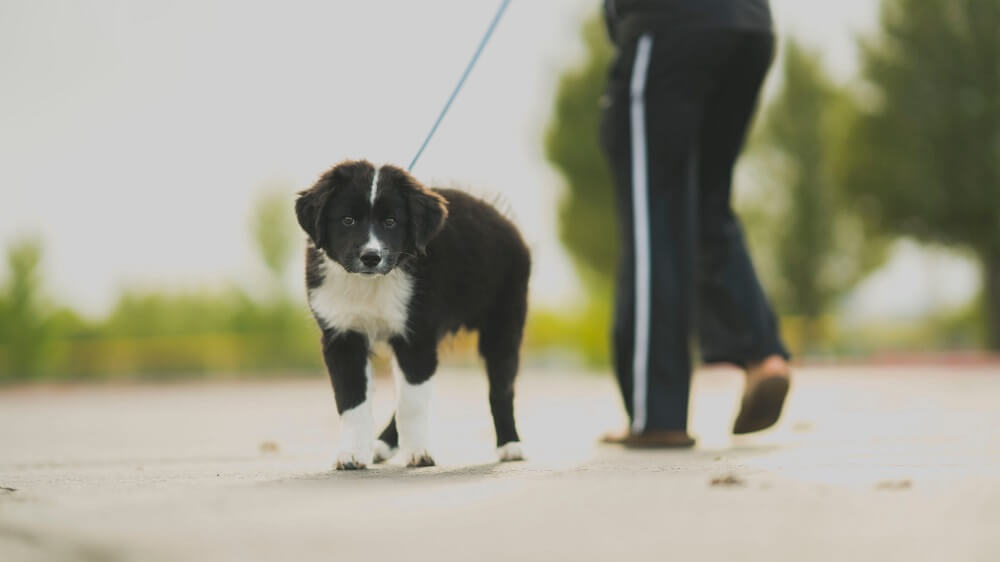
But what ranks these watchdogs so high? It is their exceptional ability to learn incredibly fast. In fact, most of the proficient class and researchers of the canine kingdom, rate Border Collie as one of the smartest dog breeds. Border Collie has a herding eye that makes them more agile. Moreover, their speed and concentration also make them great at agility sports. If you have children at home then Border Collie is the pet you want to get. They are very much a family dog and are known for their faithfulness and protective manner. Overall, the Border Collie is a smart, well-behaved, and low maintenance pet.
2. Poodle
Poodles are one of the most popular canine breeds. These curly cuties are often stereotyped as fashionable and high-maintenance, often due to their foofoo haircuts. But the reality is they are a very smart and clever dog breed and take the silver medal when it comes to canine intelligence. They are highly active and originally bred for water retrieving.
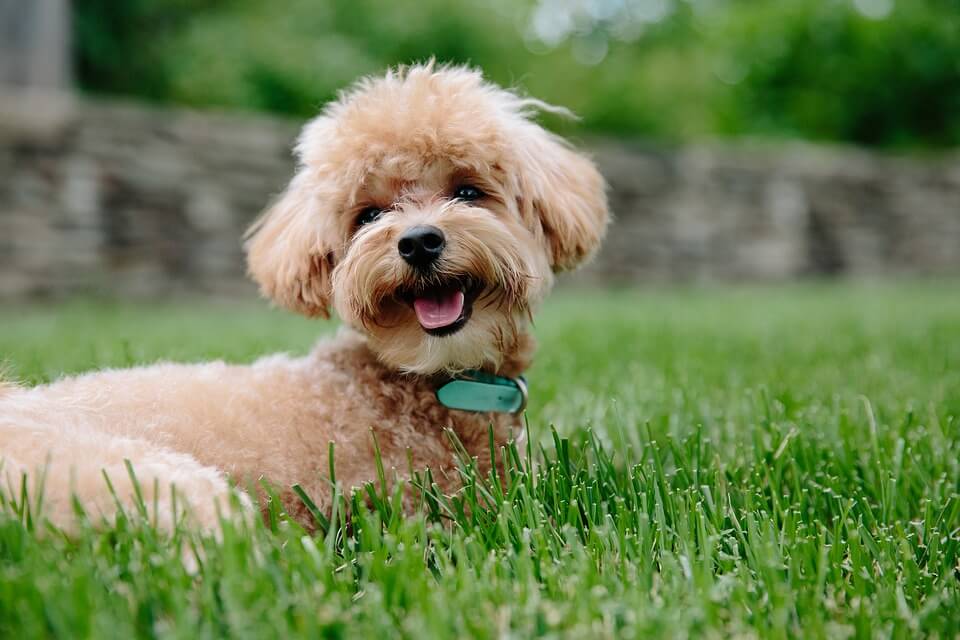
Poodles are steadfast, very clever and sharp-minded which is why they have also been used to bring supplies to soldiers during battles. They were even used by the U.S. military during World War II due to their trainable intelligence. The breed excels at obedience and is one of the easiest pups to train. Moreover, they are great problem solvers. This is why Poodles are prime choice as circus performers. Interestingly, the breed was also used for bird hunting. They make a great family pet for their loving nature and humor. More so, Poodles are great at grabbing attention with their ‘act cute’ expressions. They are one breed that loves and thrives for interaction.
3. German Shepherd
German Shepherd is the prime choice to serve as a police and military dog. Trained to sniff out drugs, bombs, and more, no doubt they make the list of the top 10 smartest dog breeds. They are one of the brightest canine breeds that not only have served the force but also have helped as medical assistance companions and even as therapy dogs. They are courageous and therefore, they are used as even bomb-detecting dogs.
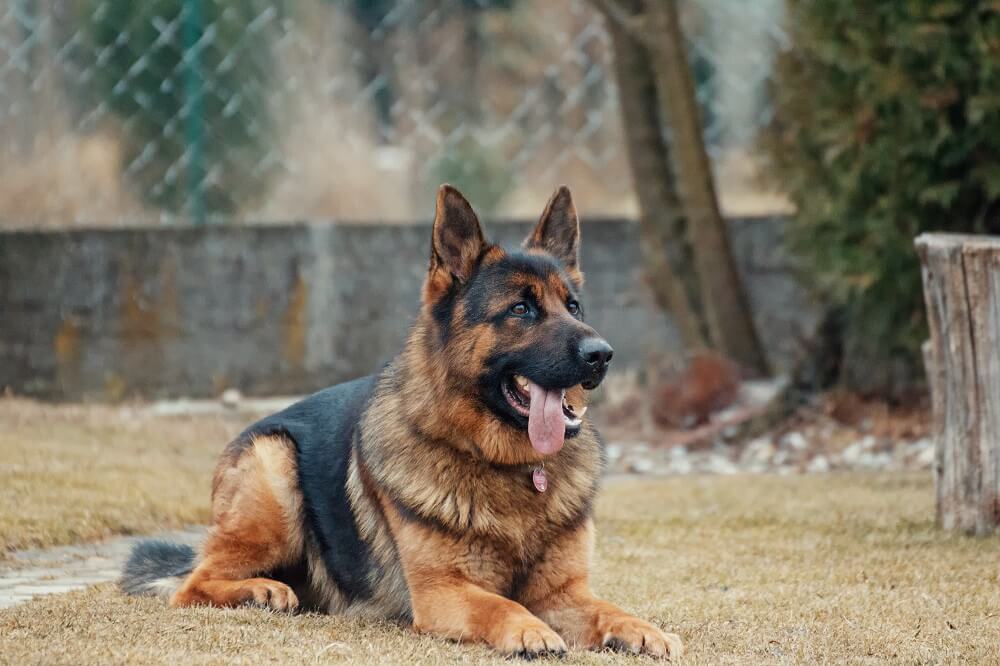
It should come as no surprise that the breed has a great track record when it comes to obedience and training. Most experts and researchers are consistent with the idea that German Shepherds are one the easiest to train. Beyond serving as a police dog, the German Shepherd is a great family companion due to its loyalty and protective instincts towards their masters. Unlike other breeds, the German Shepherd was bred for intelligence. Interestingly, they are one of the only breeds that learn new commands at first go.
4. Golden Retriever
Yes, you read that right! Golden Retriever, one of the world’s most fond of and adored family pets, is also highly regarded for its intellect. They are smart, affectionate and always eager to please which makes them a fantastic family companion. Originally bred for hunting in Scotland, the Golden Retrievers are now one of the most popular canines around the world. They can learn over 200 commands and are one of the most dependable companions. It is not a surprise that they are the most preferred breed for the disabled.

Interestingly, they are even used for search-and-rescue operations. Beyond their friendly nature, their agility and obedience also make them great service dogs. Akin to Border Collie, the Golden Retriever is very obedient during training. Unquestionably, they are the most loved canine breed by Americans due to their positive nature and low maintenance. While they are skilled and clever to perform various tasks, their favorite duty is to be a family pet.
5. Doberman Pinscher
Interestingly, the Doberman Pinscher was bred as a guardian dog by a German tax collector. They are smart, assertive and are very easy to train. While they are muscular in build and seem to be fearsome, in reality, they are quite gentle. Their posture and fearsome look may give it a reputation of a scary canine, but the truth is they are very intelligent and loyal companions. Known for their fearless nature, speed and deep stamina, they make them great guard dogs.

During WWII, the military used them to guard troops and guide soldiers through dense forests. Apart from serving as excellent police and military dogs, they also are great family pets. Modern Dobermans are less aggressive and makeup as a great addition to the family. They are obedient and very easy to train. It is no surprise that the majority of watchdogs are Doberman Pinscher. Nowadays, they have become a popular choice of a therapy dog.
6. Shetland Sheepdog
Yet another herding canine, the Sheltie is just like a miniature Collie. The fluffballs are highly intelligent, agile and obedient. Shetland Sheepdogs demand affection due to their caring and loving nature. Beyond herding, this working dog breed makes a great family pet. They are very easy to train and generally rank high in agility competitions. Shelties are able to learn new commands in a few repetitions due to their efficiency and assiduity. They are one of the most devoted canines to their family and are highly dependent.
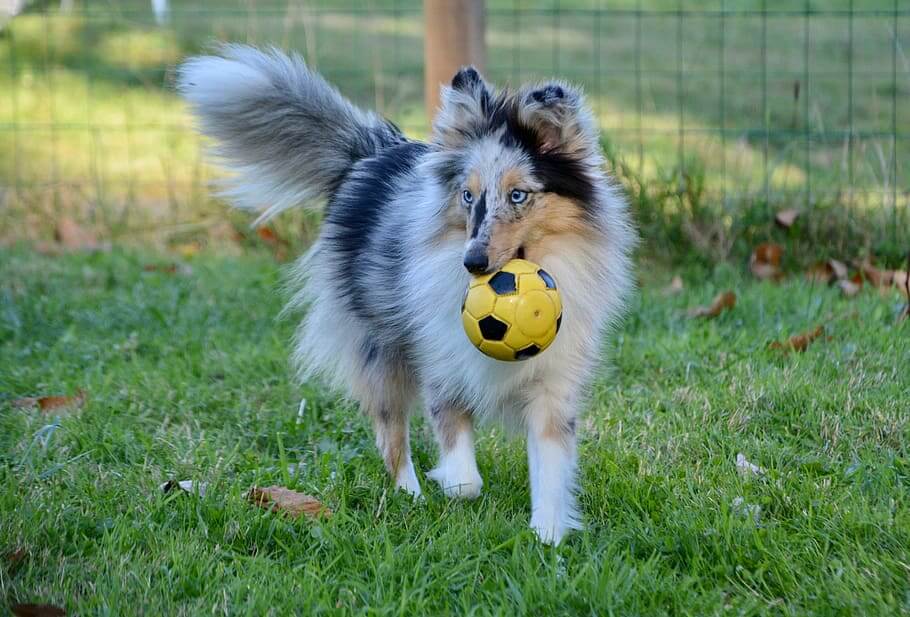
Shelties are energetic, playful and widely known for their herding skill. They are used as guard dogs as they possess danger sensing ability. Shelties are known to bark a lot to wary of strangers. Their high intellect allows them to perform almost all tasks with ease and even learn complex things very fast. However, their charm, kindness and easy-going nature can melt everyone’s heart and find them endearing. Shelties’ main aim is to please people around them and they often adjust anywhere.
7. Labrador Retriever
Labrador Retriever, affectionately known as the Labs, has been the most popular American dog breed for over two decades. They are the everyday family pet and make as perfect companions. Obviously we have seen the example of their affection in the movie Marley & Me. But the Lab is more than an ideal sporting family pet, it is used for several other tasks due to its high intellect and a stunning sense of smell. Some of the common jobs of a Lab is being a guide dog, assisting in police work, detecting narcotics and more.
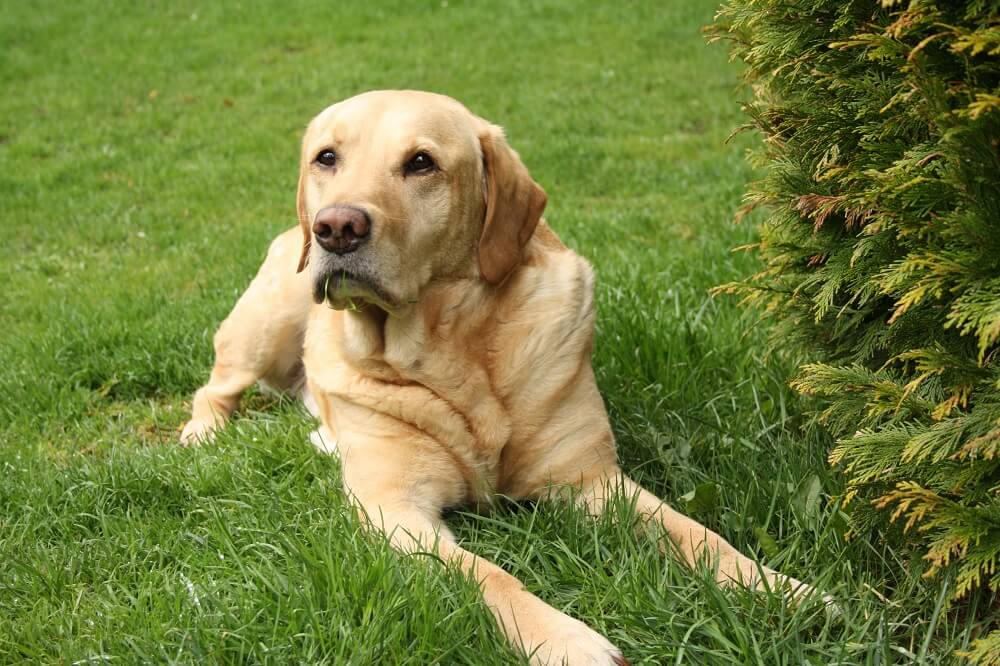
Nowadays, it is even used for search and rescue operations and therapy work. Their thick coat and heavy tail give them the ability to swim long distances in cold water. This super-smart breed is known for its patience, smartness, and gentle nature. If you have kids in your family then there is no better pup than the Labrador Retriever. One of the most unique and greatest gifts that Labs possess is ‘self-training.’ Labs have the ability to observe, learn and repeat human behaviors.
8. Papillon
The list of top 10 smartest dog breeds is fairly dominated by larger dog breeds, but the Papillon is the only small toy breed to make it on the list. Papillons are not average small canines, they are smart, agile and trainable. They are one of the most loved pets by obedient judges, and often you would see Papillon take prizes at agility trials. In French, Papillon means ‘butterfly’, referring to the pointed wing-shaped ears. These 5-pound wonders are active, alert and always try to stay happy. They are highly trainable and are stronger than they look.
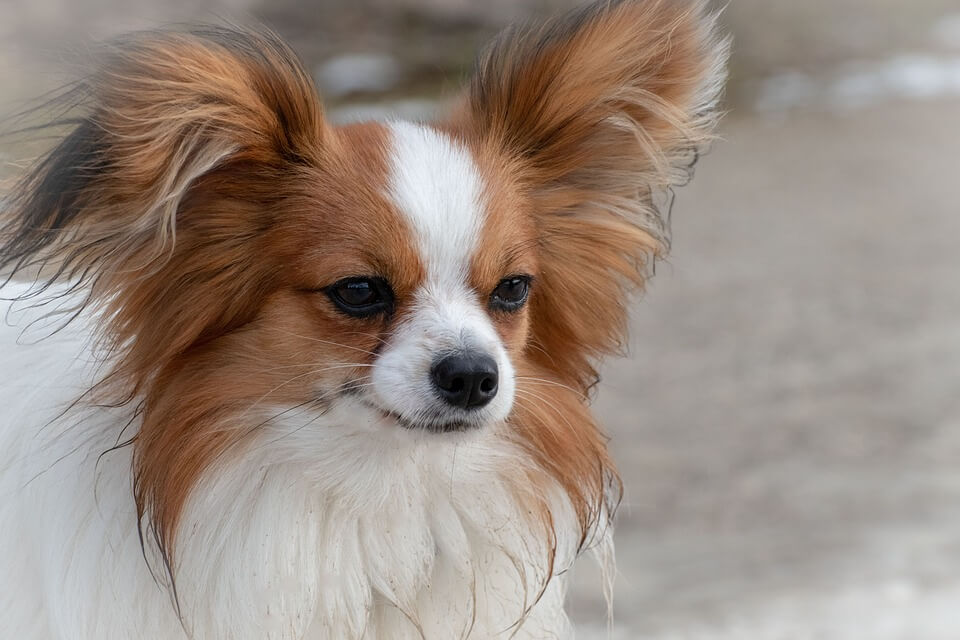
Papillon is a perfect example of the popular saying ‘size doesn’t matter.’ While they only grow to max 11-inches high, they have great stamina and can keep up with you on long walks. Papillon is overprotective to what is dear to them and their keen intellect is what makes it one of the smartest small dog breeds. They are an adorable extrovert breed that always loves to take part in different activities.
9. Rottweiler
The powerful, rugged, robust, Rottweiler is affectionate and smart dog breed. Their high intellect makes them a great police dog, obedience competitor, service dog, therapy dog and most of all an exceptional companion. Pet owners must ensure that their pup is exercised daily. Often Rottweilers get a bad reputation for being fearful, but they are all the opposite. The canine giants are very loving, caring, protective and extremely loyal pets. They do not shy away from defending their masters and family.
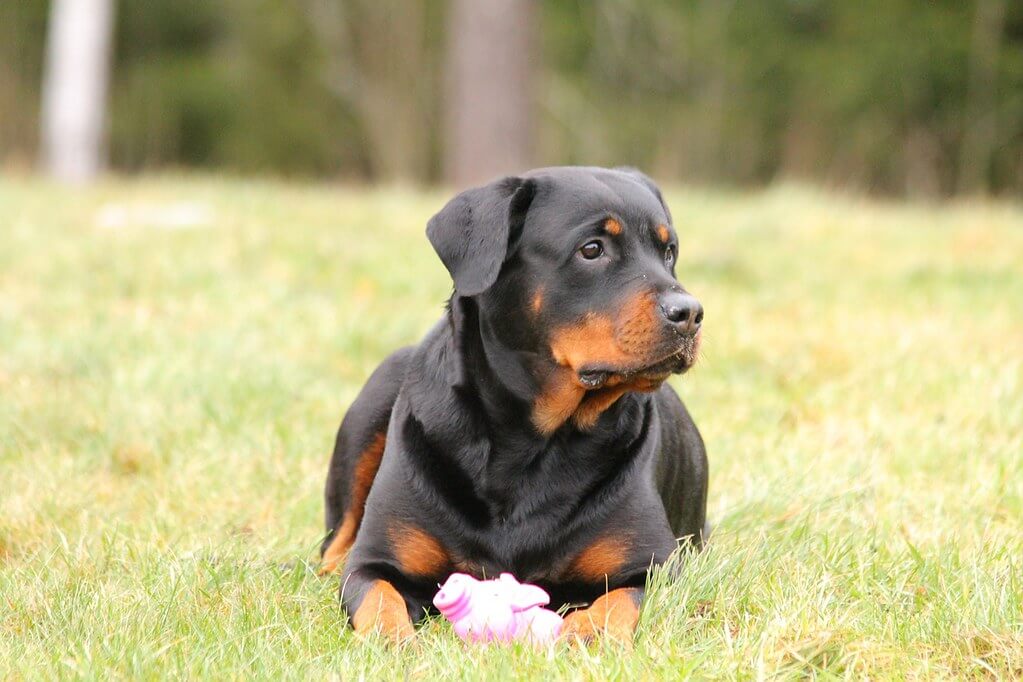
Rottweilers are a true work companion and therefore are used as guard dogs. Rottweiler is known for patience, courage and great insight. No doubt, they make a great family companion. Despite their physical appearance, they are playful and fun. Interestingly, Rottweilers are one of the first breeds to be used as guide dogs. They have great herding and guarding instincts. Apart from being smart, they are highly motivated and have a strong desire to work.
10. Australian Cattle Dog
The Australian Cattle Dog might not seem to be a common family pet, but one must not miss out on this clever breed. They are bred to herd cattle and are always happy doing the job. The breed is often credited for the development of Australia’s beef industry. The Australian Cattle Dog is alert, energetic, exceptionally intelligent, and agile. The breed is highly protective of its property and family members.
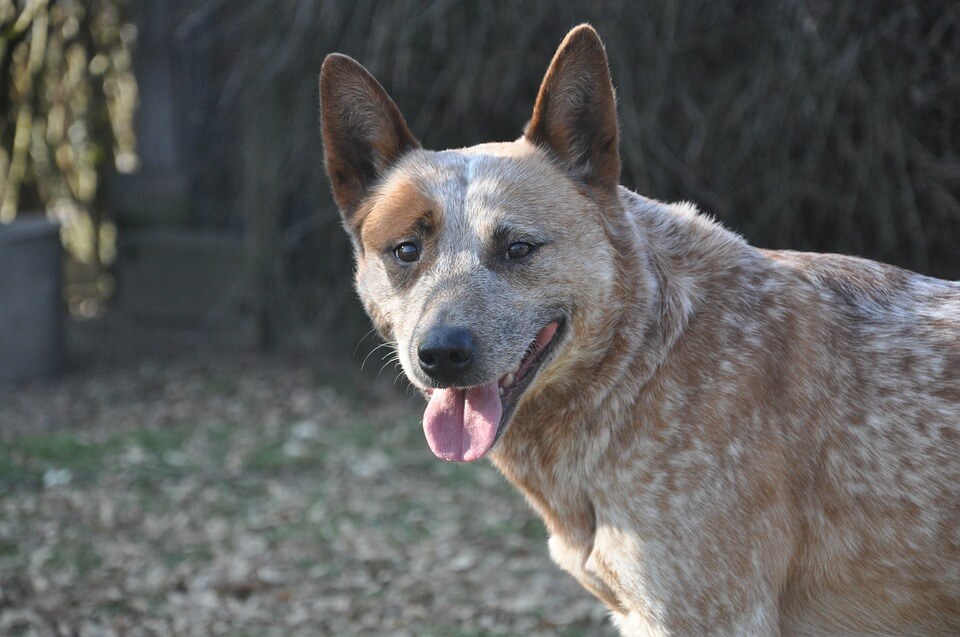
The Australian Cattle Dog is physically and mentally active and therefore is always ready to take on new experiences. The downside of its activeness is that they bore easily and will find out activities by themselves, and sometimes it may create trouble. Therefore, experts often recommend pet owners to keep their pups engaged in work or sport due to their incredible work drive. The breed is so smart and organized that they put their stuff back after using it. This breed is so smart that at times they even outsmart their masters. Experts believe that the Australian Cattle Dog is god gifted to understand human commands.
There is no research that indicates that the size of the dog is equally proportional to its intelligence. But Dr. Coren’s list of top 10 smartest dogs is dominated by bigger canines, with the only exception being Papillon. Another research from Coren suggests that larger dogs have the ability to remember things over a longer period. Small dogs are fun to play with and they have something new under their sleeve to amaze their masters.
Also Read: Top 10 Dog Muzzles | Invisible Electric Fences
Dog Intelligence Wiki
Most people not only love dogs but also adore them irrespective of the breed, size, looks or intelligence. But it is interesting to know that many canines are great mastering new tasks apart from their inherent canine jobs.
Dog intelligence has different dimensions akin to human intellect. In humans, we can categorize intelligence into memory, the ability to understand numerics, reasoning, verbal ability, and many others. When it comes to dog intelligence, experts classify canine smartness into three major facets. One of the leading canine psychologists and researcher -Stanley Coren, classifies dog intellect into the following dimensions:
- Instinctive intelligence
- Adaptive intelligence
- Working and Obedience intelligence
To boot, other experts even classify canine intellect into the below dimensions:
- Interpersonal intelligence
- Spatial intelligence
Before we learn about the smartest canine breeds, let us understand each of the different dimensions mentioned above.
What is instinctive intelligence?
Instinctive intelligence is the inherited traits of a breed. These intrinsic and native characteristics could be any such as herd animals or hunt with humans. Generally, herding dog breeds have the ability to rally animals and guide them in the right direction. Since canine domestication began, humans and dogs have hunted together. These hunting dog breeds possess a strong prey drive and are highly receptive to training.
Instinctive intelligence is inborn, while adaptive intelligence is more about social awareness and learning from the environment. Generally, canines learn through observation such as working with latches. Adaptive intelligence denotes the problem-solving ability of your pooch. Some of the common scenarios are like understanding expressions of pet owners or recognizing friends, families and frequent visitors.
Working intelligence is the ability of your canine to comprehend from humans. It refers to the ability a pooch can train for high-level tasks such as becoming a guide dog. Obedience intelligence also includes languages and numbers that your four-legged friend can learn from you. According to Dr. Coren, most dogs are able to learn more than 165 words, while the more clever canines have the ability to grasp more than 250 words. The more clever dog breeds have the potential to learn faster than the other breeds.
Are you amazed at your pooch’s ability to understand commands or even perform new tricks? Pet owners love smart dog breeds as they are able to perform a number of tricks and are great companions to play games with kids. More so, clever canines are much easier to train and take less time to learn what you try to teach them.
Most pet owners believe their canine is a genius. Many even believe that the Beagle is the smartest and most clever dog breeds, but research highlights that it is one of the least trainable dogs. However, they must know that some breeds are smarter than the average dog. Does that mean that you should get and breed canines that are considered as the smartest canine breeds? Certainly not. Every dog has its qualities and intelligence. The top 10 smartest dog breeds are ranked on general intelligence and not special qualities or instinctive intellect that each of the canine breeds possesses.
For example, the Beagle is ranked seventy-third on Dr. Coren’s list, but it is known to have one of the best sniffing powers to detect illegal agriculture imports. Beagles are commonly used as detection dogs by many government departments around the world. Interestingly, Beagle is also known as one of the most sociable canines. Similarly, the Afghan Hound is ranked very low when it comes to intelligence, but its inherent intellect makes it capable of spotting and hunting antelope and gazelle.
Pet owners must also remember that having the smartest canine as your pet is not always the best option as it can equally be challenging. Besides, your pup does not have to be a genius to show you love, and affection. All dogs are terrific companions and pet owners need to focus on their canines’ strengths. Commonly, we measure dog intellect by their ability to solve problems or the pace at which they learn new commands or even their level of obedience.
Smart dog breeds can grasp many things you want them to learn but at the same time it will pick up things that they should not learn. Clever canines also learn things that it can get away with. Therefore, pet owners will have to spend more time and effort in teaching smart dog breeds its limits in the household.
All dogs make the best companion and friends, while some are more loveable and sociable, others rank high on intelligence. Dog trainers believe all canines are capable of learning basic commands such as sitting and staying. The only difference between the average dog breeds and the smarter ones is the time it takes to catch on. The basic idea is to know what your pup is built for and focus on its strengths. Instead of breeding the smartest canine breeds, it is best to choose a pet that matches your lifestyle and becomes a great companion.
Do Smart Dogs Make Better Pets?
As a pet owner, you might believe that a clever canine will be a better family companion, but it is not quite true. A clever dog will understand and learn new commands quickly, but at the same time it will pick up things that they shouldn’t.
For example, Doberman is one of the smartest dog breeds, however, they do get bored very easily. So if left alone for a few hours then there is a chance that your house may turn into a scrapyard. Even other breeds on the list such as the Border Collie needs to be kept busy. if not then there is a chance that they might get into trouble or create one for their masters. It is best to get a pet that matches your lifestyle and fulfills your needs.
Excerpted from “The Intelligence of Dogs“:

- Border Collies
- Poodle
- German Shepherd
- Golden Retriever
- Doberman Pincher
- Shetland Sheepdog
- Labrador Retriever
- Papillon
- Rottweiler
- Australian Cattle Dog
- Pembrook Welsh Corgi
- Miniature Schnauzer
At the low end of the intelligence rankings are:
106. Borzoi
107. Chow Chow
108. Bulldog
109. Basenji
110. Afghan Hound
One of the more surprising things that this book points out is that, depending upon your lifestyle, it may be more difficult to live with a more intelligent, rather than a less intelligent dog. To quote from the book:
An example of how an intelligent dog can use bad behavior to manipulate its owner comes from a single woman who owned a Miniature Poodle named “Arnold”. She inadvertently trained it to urinate on her bed whenever she had a male guest stay over at her house. She interpreted this behavior as “jealousy” on Arnold’s part. The real problem was that the dog was simply too smart. When the owner was by herself she paid a good deal of attention to the dog. However, she fell into the trap that many of us do and paid more attention to the dog’s misbehaviors than to its desirable activities. One particularly undesirable behavior, which brought a lot of attention, was urinating on the bed. However, the woman managed to break the dog of the habit and was confident that it was now under control. Whenever her boyfriend came to visit, however, she paid considerably more attention to her guest and consequently less attention to the dog. Arnold remembered the amount of social contact which was engendered by urinating on the bed and was smart enough to understand that this behavior would work in the present conditions. The end result was obvious.
Whenever she hosted a male guest, the dog would head for the bedroom with malice aforethought. It was a guaranteed method of gaining attention.
Intelligent dogs are inadvertently taught many unwanted behaviors. Increasing the activity level in a household, and increasing the number of people that are present in it, increases the likelihood that chance associations will be learned. For the intelligent dog, this means that there is a greater opportunity to learn things that will be useful in adapting to everyday life, but also provides a greater opportunity for the dog to learn “odd” or annoying associations. Consider the case of “Prince”, a Border Collie whose great joy in life was to race around outdoors. Whenever someone was about to leave the house Prince would race after them, trying to get outside. Once, after Prince had started his mad dash for the exit, the screen door swung closed and the dog ended up crashing through the wire mesh. Rewarded by the chance to romp outside, the dog learned from this one instance that it could create its own “doggie door” by simply running full tilt at the screen. After several repairs had been attempted, Prince’s owners added a protective layer of heavy farm wire that the dog could not a breakthrough. Frustrated by this new development Prince began casting around the house and noticed that many of the windows were open and only covered by the same material that used to cover the screen door. For this intelligent dog, it was easy to reach the conclusion that these windows could also be used as exits.
Instantaneously, every open ground floor window then became a target Prince’s headlong rush for the joys of the outdoors, much to the dismay and annoyance of the dog’s owners. A less intelligent dog would have been considerably less likely to form the association that crashing through the screen results in outdoor time, based upon a single instance. Furthermore, when confronted with the obstacle of the heavy wire over the door screen, the less intelligent dog would have been considerably less likely to generalize its knowledge and apply its newly learned information to windows or other screened apertures. Simply put, the less intelligent dog will miss many of these chance contingencies and hence will move through the noise and chaos of a busy household without learning bad habits from only one or two associations.
Intriguing post. I’ve been pondering about this matter, so a debt of gratitude is in order for posting. Cool post.
It ‘s extremely exceptionally decent and Useful post.
Thanks!
Best regards,
Thomassen Duke